
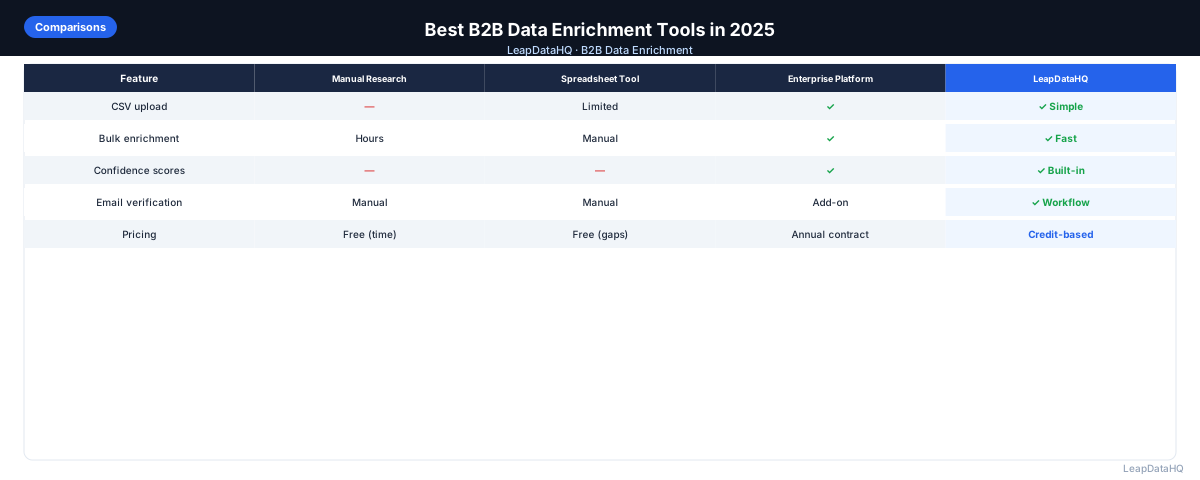
B2B data enrichment tools all promise to fill in missing contact and company data, but they vary meaningfully in who they're built for, how they work, and what they cost. A tool designed for large enterprise RevOps teams is very different from one built for a three-person agency or an individual SDR.
This guide compares the main categories of B2B data enrichment tools in 2025, covering what each type does well and what to evaluate when making a decision. The goal is to help you find the right fit for your workflow.
Note: capabilities and pricing change frequently. Verify current features and pricing directly with each vendor.
Choosing the wrong enrichment tool costs more than just the subscription fee. The hidden cost is the time your team spends working around a tool that does not fit your workflow — manually reformatting CSV files to match the tool's input requirements, re-running records that the tool failed to match on the first pass, and double-checking results because the tool returns low-confidence matches without clear indicators. A tool that looks cheaper on paper can end up costing more in team hours than a tool with higher per-record pricing but better workflow fit.
The best approach to selecting an enrichment tool is to define your workflow requirements first — volume, input format, required fields, output format, and team skill level — and then evaluate tools against those requirements. Starting with your own requirements rather than with feature comparison lists leads to better decisions because you evaluate each tool on what matters for your specific use case rather than on general popularity or advertised capabilities.
What to Look for in a Data Enrichment Tool
- Volume: how many records do you need to enrich per month?
- Fields: do you need email only, or also phone, company data, revenue, technographics?
- Workflow: CSV upload, CRM integration, or API?
- Team size: individual SDR, small team, or enterprise RevOps?
- Budget: credit-based pay-as-you-go vs. annual subscription?
- Geographic coverage: US-only, global, or specific international markets?
Category 1: All-in-One Sales Intelligence Platforms
Apollo.io and ZoomInfo combine a prospect database with enrichment capabilities, letting you both find new contacts and enrich existing data. Best for teams that want a single tool for both prospecting and enrichment. They have large databases and broad field coverage. The trade-off is cost — both require annual subscriptions at enterprise pricing.
Category 2: CSV-First Enrichment Tools
Tools like LeapDataHQ and Hunter.io are designed around uploading a file and downloading enriched results. Simpler to use than full platforms and typically offer more flexible, usage-based pricing. Best for teams that know who they want to reach and need to fill in missing contact data — especially for agencies doing per-client work and small teams that don't need a full prospecting database.
Category 3: Flexible Workflow Enrichment
Clay.com is a flexible data operations tool that connects to multiple enrichment providers and lets you build custom enrichment workflows. When one provider misses a record, Clay automatically tries another (waterfall enrichment). Best for teams that want maximum match rates across multiple providers and have technical team members who can configure workflows.
Category 4: CRM-Native Enrichment
Clearbit (now Breeze Intelligence within HubSpot) and similar tools enrich data directly inside your CRM without CSV export/import cycles. Best for teams already paying for the CRM platform that includes enrichment. The trade-off is being locked into the enrichment provider bundled with your CRM.
Comparison by Team Type
Ready to enrich your CSV list?
Upload a CSV, fill missing data, review confidence scores, and export clean records.
Upload a CSV — Start Enriching- SDR at a small company (low volume): CSV-first tool with pay-as-you-go credits
- Agency enriching lists for multiple clients: CSV-first tool — variable volume per client
- SMB RevOps with regular enrichment needs: mid-tier enrichment tool with monthly plan
- Enterprise RevOps with Salesforce/HubSpot: CRM-native enrichment or API integration
- Technical team wanting maximum match rates: Clay.com for waterfall enrichment
- High-volume prospecting team: Apollo.io or ZoomInfo for combined prospecting + enrichment
Key Questions to Ask Any Enrichment Vendor
- What is your email match rate for my target market/industry/geography?
- How do you determine confidence scores, and what do different levels mean?
- What is your data refresh cadence — how often is the database updated?
- What happens to credits for records that aren't matched?
- Do you offer a free trial or sample enrichment to test match rates on my actual data?
- How do you handle GDPR and data privacy compliance?
The Case for Testing Before Committing
Match rates vary significantly by tool and by target market. A tool that works well for US tech companies might have poor coverage for European SMBs or niche industries. The only reliable way to evaluate a tool for your specific use case is to test it with a sample of your actual data before committing to an annual plan.
Evaluating Enrichment Quality Beyond Match Rate
Match rate is the most commonly discussed metric for enrichment tools, but it is not the only important one. A tool with a 70% match rate and 90% confidence in those matches may produce better outreach results than a tool with an 85% match rate and only 50% confidence in what it returns. The quality of matches matters as much as the quantity, because low-confidence matches that turn out to be wrong create bounced emails, incorrect personalization, and wasted outreach effort.
Other quality indicators to evaluate include how the tool handles common edge cases, such as contacts with common names where multiple matches are possible, contacts at large organizations where multiple people share the same name in different departments, and international contacts with non-standard name formats or domains. Testing a sample of results for these specific cases gives you a clearer picture of real-world performance than overall match rate alone.
When to Combine Multiple Enrichment Tools
Many teams achieve the best results by combining two enrichment tools rather than relying on a single provider. A common pattern is to use a CSV-first tool for bulk enrichment of standard fields like email and job title, then run the unmatched or low-confidence records through a second tool that may have better coverage for certain geographies or industries. This approach increases overall match rate while maintaining quality thresholds.
When combining tools, be aware of the cost implications — you pay for enrichment from both tools on overlapping records. A more efficient approach is to run records through one tool first, then only send unmatched records and those below your confidence threshold to the second tool. The waterfall approach maximizes match rate while controlling total enrichment cost.
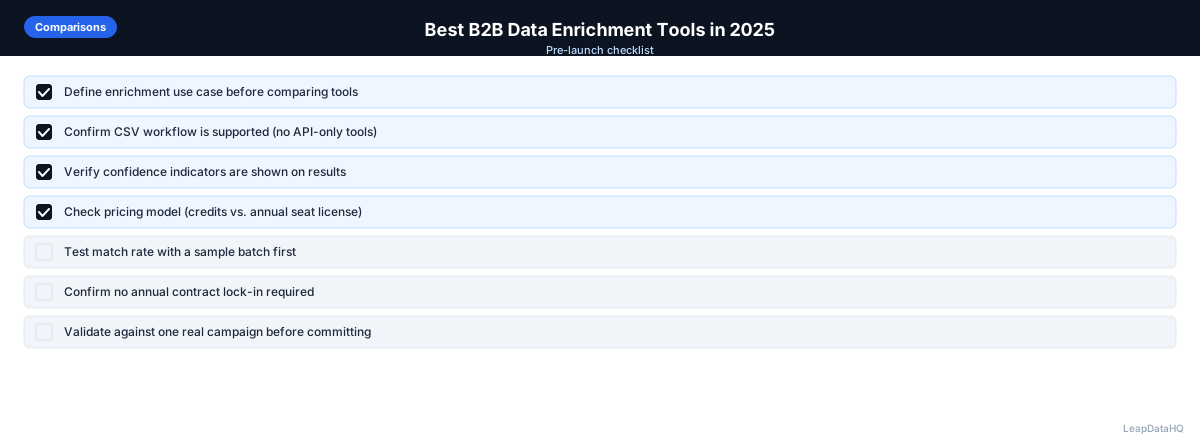
When to Use LeapDataHQ
LeapDataHQ fits the CSV-first enrichment category: you upload your list, get emails and company data appended with confidence scores, and export a clean file ready for outreach. No annual contract, no seat fees — credits scale with your actual volume.
For teams that need a flexible, low-friction enrichment tool without the overhead of an enterprise platform, try the tool with a small upload to test match rates on your specific target market before committing.
Start Enriching LeadsFrequently Asked Questions
Is there a best data enrichment tool for everyone?
No. The right tool depends on your volume, workflow, team size, and geographic market. Evaluate tools based on your specific requirements, not general popularity rankings.
How much do data enrichment tools cost?
Pricing ranges from free-tier tools with limited monthly credits to enterprise platforms costing thousands per month. CSV-first tools with pay-as-you-go pricing typically cost a few cents to a few dollars per enriched record depending on volume and fields.
Can I use multiple enrichment tools at the same time?
Yes, and many teams do. You might use a simple CSV tool for routine enrichment and a more powerful platform for high-priority accounts. Just be aware of the cost and complexity of managing multiple subscriptions.
How do I evaluate enrichment tool accuracy?
Test with a sample of 50–100 contacts from your actual target market. Measure match rate, confidence distribution, and spot-check accuracy by verifying returned emails against LinkedIn. Then monitor bounce rate in your first outreach campaign as a real-world quality signal.
Related Tools & Guides
Related Articles
What Is Data Enrichment? A Practical Guide for B2B Teams
CSV EnrichmentCSV Data Enrichment Guide: How to Turn a Basic List Into Sales-Ready Data
ComparisonsApollo.io Alternative for Data Cleanup: When to Use a Simpler Tool
ComparisonsZoomInfo Alternative for Small Teams: What to Consider