
Outbound list building is one of the most time-intensive parts of any sales process — and one of the most impactful. A well-targeted, enriched list is the difference between a campaign that generates pipeline and one that generates spam complaints.
The challenge is that building lists "the right way" sounds simple but involves multiple steps that most teams rush through: choosing the wrong company targets, missing the right decision-maker titles, skipping enrichment verification, or loading the list into a sequencer before it's actually clean.
Each phase of list building affects the quality of the final output. Vague targeting produces broad lists with low relevance. Missing the right titles means your message reaches people who can't buy. Skipping enrichment means you're sending to incomplete records. Loading before cleaning means bounces and broken personalization.
The teams that excel at outbound treat list building as a disciplined process with defined phases, quality gates at each step, and consistent standards for what makes a list "ready." This guide walks through that process from start to finish.
Phase 1: Define Your Targeting Criteria
Effective outbound starts with specific targeting. Vague targeting produces broad lists with low reply rates. Define your ICP along these dimensions:
- Industry and sub-industry (e.g., not just "tech" but "B2B SaaS companies")
- Company size range (by headcount or revenue)
- Geography (country, state, metro area)
- Business model (e.g., direct sales, channel sales, subscription)
- Growth signals (recently funded, recently hiring, recent news)
The more specific your targeting, the easier it is to write relevant messaging — and relevant messaging drives higher reply rates.
Phase 2: Build Your Target Company List
With your targeting criteria defined, build a list of specific companies that match. Sources include LinkedIn company search, Crunchbase for funded companies, G2 and Capterra category pages, conference attendee lists, industry association directories, and job board data signaling growth.
Build a spreadsheet with company name, domain, and why each company matches your ICP. This becomes the foundation of your lead list.
What This Means for Your Outreach
A well-built outbound list is the foundation of every successful campaign. The quality of your targeting determines whether your message is relevant to recipients. The quality of your enrichment determines whether your message reaches them. The quality of your cleaning determines whether it delivers without bouncing.
Teams that invest in systematic list building see compounding returns. Each campaign teaches you something about what works — which industries respond, which titles engage, which company sizes convert. That learning feeds back into better targeting for the next campaign, creating a cycle of continuous improvement.
Conversely, teams that rush through list building pay the cost in poor campaign performance. Low reply rates, high bounce rates, and spam complaints are almost always traceable to problems in the list building process, not the messaging itself.
Who Should Use This Outbound List Building Process
This process serves anyone building prospect lists for B2B outbound:
- SDRs and BDRs: building weekly prospecting lists for cold outreach campaigns
- Sales team leads: establishing repeatable list building processes for their teams
- Agency teams: building targeted lists for multiple clients across different industries
- Founders doing early sales: building their first prospect lists without dedicated support
- Growth marketers: running account-based marketing campaigns that need targeted lists
- RevOps teams: ensuring clean, enriched data flows into outreach tools
- Business development professionals: identifying and reaching new market opportunities
Phase 3: Identify Target Contacts at Each Company
For each company on your list, find 1-3 contacts who match your buyer persona. Typically this means people with decision-making authority or direct influence over the purchase. LinkedIn's People search within a company page lets you filter by title keywords.
Aim for people who are close enough to the problem to understand your solution, with enough authority to move forward. For smaller companies, target founders and C-suite. For mid-market, target VPs and directors. For enterprise, target managers and directors who influence the buying committee.
Phase 4: Enrich for Complete Contact Data
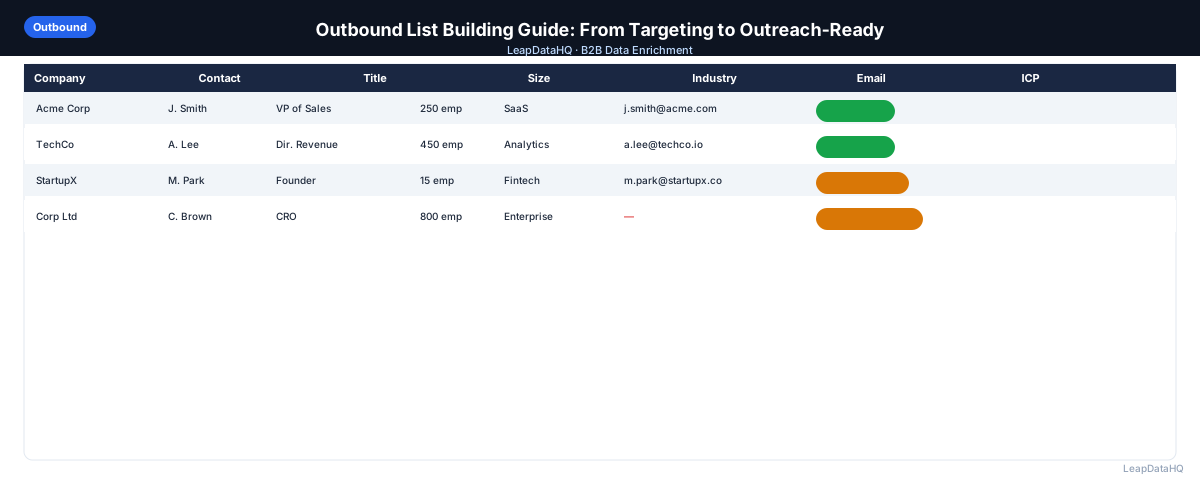
At this point your list has company names, domains, and contact names — but probably no email addresses or phone numbers. Upload your CSV to an enrichment tool to append the contact data you need for outreach.
Review confidence scores on returned emails. High-confidence emails are safe to use. Low-confidence results should be manually verified or excluded. Don't load everything into your sequencer without this review step.
Phase 5: Clean and Validate the List
Before loading the enriched list into your outreach tool, clean it:
- Remove any duplicate email addresses
- Verify all required personalization fields are populated
- Remove role-based emails (info@, support@)
- Suppress existing customers and recent unsubscribes
- Run a final email verification pass
Phase 6: Segment Before You Send
Ready to enrich your CSV list?
Upload a CSV, fill missing data, review confidence scores, and export clean records.
Upload a CSV — Start EnrichingNot all contacts on your list should receive the same message. Segment by company size, industry, or persona type and tailor your sequence accordingly. Even small adjustments to messaging based on segmentation — different subject lines, different value props, different case study references — can measurably improve reply rates.
How Often to Build New Lists
For active outbound programs, build fresh lists monthly or quarterly. Re-use of old lists (beyond 2-3 contact attempts) has sharply diminishing returns and can trigger spam complaints as recipients recognize repeated outreach. Fresh targeting produces fresh pipeline.
Checklist: Outbound List Building
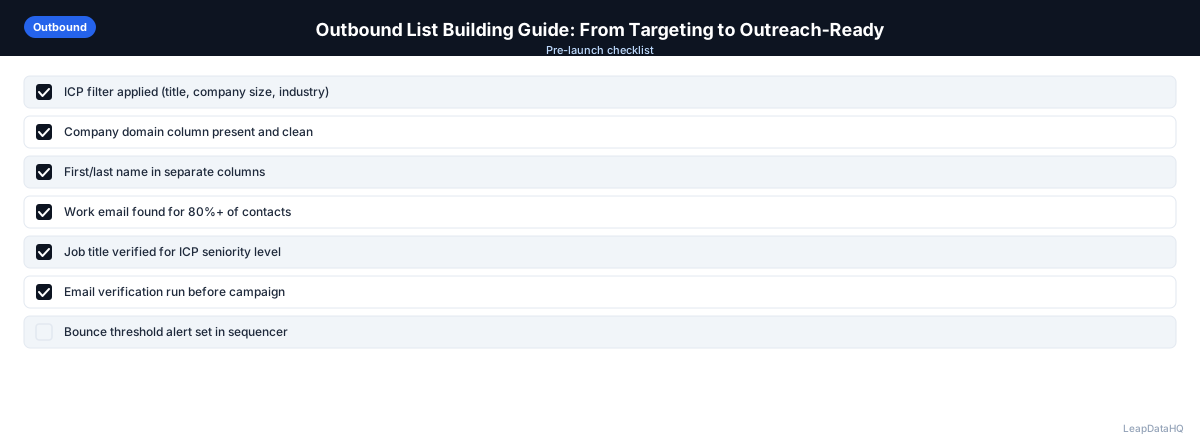
- Defined ICP with specific industry, size, geography, and growth signal criteria
- Built target company list with company names and domains from multiple sources
- Verified each company matches ICP criteria before adding to list
- Identified 1-3 decision-maker contacts per target company on LinkedIn
- Prepared input CSV with domain, first name, last name, and title columns
- Removed duplicates and standardized formatting in input file
- Uploaded cleaned CSV to enrichment tool and mapped columns correctly
- Reviewed confidence scores on all returned enriched records
- Filtered to high-confidence results before export
- Verified enriched email addresses before importing to sequencer
- Cleaned final list: removed duplicates, role-based emails, unsubscribes
- Segmented contacts by industry, company size, or persona for targeted messaging
Common Mistakes to Avoid
- Building lists that are too broad: "Any company with a sales team" is not useful targeting. The more specific the ICP — industry, size, tech stack, growth stage — the better your messaging and results.
- Prioritizing quantity over quality: 200 well-matched leads outperform 2,000 poorly matched ones. Focus your list building on quality targeting rather than volume.
- Skipping enrichment verification: Importing everything without reviewing confidence scores leads to high bounce rates. Filter to high-confidence results before loading into your sequencer.
- Not segmenting before sending: One-size-fits-all messaging to a broad list produces low reply rates. Segmentation enables relevant messaging that resonates with each group.
- Reusing old lists without refreshing: Contact data decays over time. Lists older than 3 months should be re-enriched before reusing for new campaigns.
- Loading lists before cleaning: Skipping the cleaning step means duplicates, formatting errors, and invalid emails reach your sequencer. Always clean before loading.
- Not tracking list quality metrics: Track deliverability, open rates, and reply rates by list to understand which targeting and enrichment approaches work best.
Practical Examples
Example 1: SDR Building a Weekly Prospecting List
An SDR at a B2B SaaS company defines her ICP: mid-market tech companies (100-500 employees) in the US with a VP of Sales. She builds a list of 100 companies from LinkedIn, identifies 2 contacts per company (200 total), enriches for emails, and segments by company size. After cleaning and verification, she loads 175 verified contacts into two separate sequences.
Example 2: Agency Building Lists for Multiple Clients
An agency manages outbound for 5 clients across different industries. For each client, they define ICP criteria, build company lists from industry-specific sources, identify decision-makers, enrich, clean, and segment. Each client receives a targeted list of 200-300 verified contacts with messaging tailored to their industry and persona.
Example 3: Founder Building First Prospecting List
A founder launching a new B2B product defines her ICP based on her best existing customers: Series A fintech companies with 20-100 employees. She builds a list of 80 companies from Crunchbase, identifies founders and heads of product as contacts, enriches for emails, and launches her first outbound campaign to 65 verified contacts.
Example 4: ABM List for Enterprise Targets
A sales team builds an ABM list of 50 enterprise accounts. For each account, they identify 3-5 stakeholders across different departments (engineering, IT, finance). After enrichment, they segment by department and create tailored sequences for each stakeholder type, referencing the specific challenges each department faces.
Example 5: Quarterly List Refresh
A growth team refreshes their outbound list quarterly. They start with the previous quarter's target companies, re-enrich contacts to catch job changes, add new companies that now match their ICP, remove companies that have become customers, and build fresh sequences with updated messaging based on last quarter's learnings.
How LeapDataHQ Helps
LeapDataHQ fits into Phase 4 — enriching your list of target companies and contacts to append email addresses and company data. Upload your Phase 3 output (company domains + contact names), enrich, review confidence scores, and export an enriched file ready for Phase 5 cleaning.
For teams building outbound lists regularly, the credit-based pricing means you pay per batch rather than a flat monthly rate. This keeps costs aligned with actual list-building activity. Build a list of 200 one month and 500 the next — you only pay for what you enrich.
The confidence scoring system helps you filter to high-quality results before the cleaning phase, ensuring that only reliable email addresses reach your sequencer. Visit /sales-prospecting-data-tool and /pricing to explore how LeapDataHQ fits your list building workflow.
Next Steps
Start by defining your ICP with specific criteria, then build a target company list of 50-100 accounts. Identify contacts, enrich with LeapDataHQ, and work through the cleaning checklist. Track your campaign metrics to learn which targeting and enrichment approaches produce the best results for your market.
When to Use LeapDataHQ
LeapDataHQ fits into Phase 4 — enriching your list of target companies and contacts to append email addresses and company data. Upload your Phase 3 output (company domains + contact names), enrich, review confidence scores, and export an enriched file ready for Phase 5 cleaning.
For teams building outbound lists regularly, the credit-based pricing means you pay per batch rather than a flat monthly rate — keeping costs aligned with actual list-building activity. Build lists of varying sizes without committing to monthly minimums.
For agencies building lists for multiple clients, LeapDataHQ provides a single enrichment tool that works across different industries and geographies. Run enrichment batches for different clients using the same account, and export separate outputs formatted for each client's outreach tool.
The confidence scoring system is particularly valuable during list building because it lets you filter to high-quality results before the cleaning phase. This means your cleaning step starts with better raw data, producing cleaner final lists and better campaign performance.
For teams evaluating their list building process, LeapDataHQ offers a straightforward way to test enrichment quality with real data. Upload a sample batch and see match rates for your specific target market before committing to larger volumes. Visit /sales-prospecting-data-tool and /features to explore how it fits your workflow.
Start Enriching LeadsFrequently Asked Questions
What's a good list size for a cold email campaign?
Start with 200-500 well-targeted, enriched, verified contacts for a new campaign. This is large enough to get statistically meaningful results and small enough to manage and personalize effectively.
Is it better to have a few large lists or many smaller segmented lists?
Smaller, segmented lists almost always outperform large undifferentiated lists. Segmentation allows more relevant messaging, which produces higher reply rates. The extra time to segment pays off in campaign performance.
How do I measure outbound list quality?
Track: email deliverability rate, open rate, reply rate, and meeting rate. Deliverability and reply rates are the most direct measures of list quality. Low deliverability indicates bad emails; low reply rate may indicate targeting or messaging issues.
Should I hire someone to build lists or do it in-house?
Many companies use a combination: in-house for ICP definition and strategic targeting, with a tool or a specialized researcher handling the raw sourcing and enrichment. The key is maintaining quality control — whoever does the building should follow a consistent process.
What's the most common outbound list building mistake?
Building lists that are too broad. "Any company with a sales team" is not a useful targeting criterion. The more specific the ICP — industry, size, tech stack, growth stage — the better your messaging and your results.
How often should I build new outbound lists?
For active outbound programs, build fresh lists monthly or quarterly. Re-use of old lists beyond 2-3 contact attempts has diminishing returns and can trigger spam complaints. Fresh targeting produces fresh pipeline.
What enrichment fields matter most for outbound list building?
Email address is essential — without it you can't do email outreach. Job title enables targeting the right decision-makers. Company size and industry enable segmentation and relevant messaging. Tech stack matters if your product has specific integrations.