
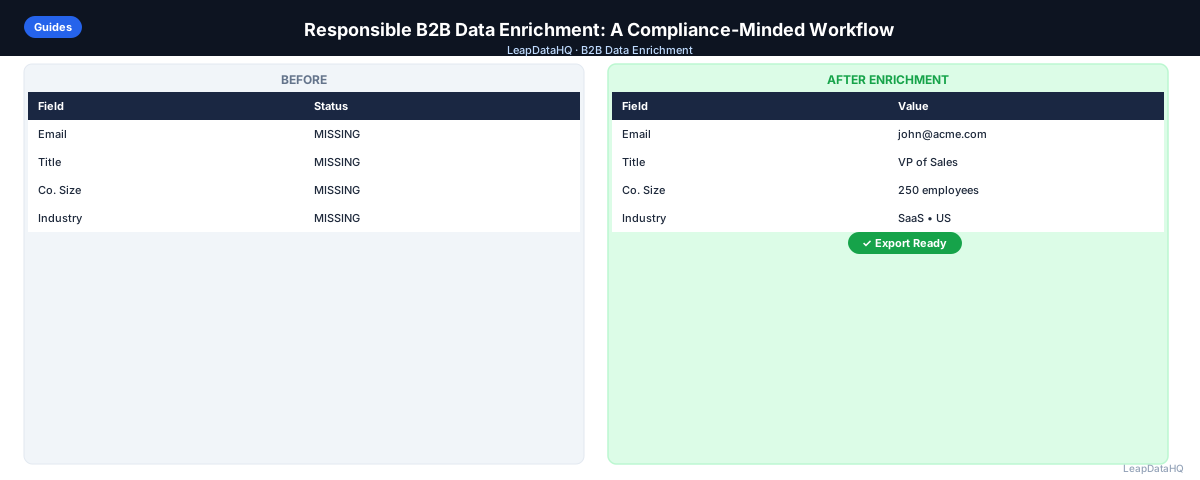
Data enrichment adds contact and company details to records you already have. Because it works with personal and business information, it sits alongside a set of rules and norms about how that information can be collected, used, and contacted — rules that vary by region and by the platforms you draw data from.
This guide is a practical starting point for thinking through responsible enrichment. It is not legal advice, and laws vary by jurisdiction and change over time — always confirm current requirements for your specific situation with qualified legal counsel. What follows is a workflow-level framework for the decisions most B2B teams need to make before, during, and after enrichment.
What "Responsible Enrichment" Means in Practice
Responsible enrichment means three things in practice: using data sources that are lawfully collected and appropriately licensed, being transparent about how enriched data will be used, and giving recipients of your outreach clear ways to opt out. It does not mean avoiding enrichment altogether — it means building the workflow so that enrichment supports legitimate business outreach rather than mass, indiscriminate contact.
Data Source Considerations
Not all data sources are equal. Public business information — company websites, public filings, professional directories — generally carries fewer restrictions than data scraped in violation of a platform's terms of service. Before using any enrichment source, it is worth understanding roughly where its data comes from and whether it respects the terms of the platforms it draws from.
Avoid enrichment approaches that rely on scraping platforms like LinkedIn in violation of their terms, or that claim to bypass rate limits or access controls. Beyond the compliance risk, data obtained this way is often lower quality and more likely to be outdated or already blocked.
Understanding the Regulatory Landscape (Not Legal Advice)
A few frameworks come up repeatedly in B2B outreach and are worth being generally aware of, though you should consult current official guidance and legal counsel for your specific situation:
CASL (Canada)
Canada's Anti-Spam Legislation applies to commercial electronic messages sent to or from Canada and generally requires consent, clear sender identification, and an unsubscribe mechanism. B2B messages sent to a business email in the course of that business have narrower exemptions in some cases, but the specifics matter — review the official guidance from the Canadian Radio-television and Telecommunications Commission for current requirements.
CAN-SPAM (United States)
The US CAN-SPAM Act applies to commercial email and requires accurate sender information, a clear opt-out mechanism, and honoring opt-out requests promptly. It does not require prior consent for B2B commercial email in the way some other frameworks do, but it does impose clear labeling and opt-out obligations.
GDPR (European Union)
Ready to enrich your CSV list?
Upload a CSV, fill missing data, review confidence scores, and export clean records.
Upload a CSV — Start EnrichingThe EU's General Data Protection Regulation applies broadly to processing personal data of individuals in the EU, including business contacts, and generally requires a lawful basis for processing, transparency about data use, and mechanisms for individuals to exercise data rights. GDPR's reach extends to enrichment specifically because enrichment involves processing personal data (names, emails, roles) even in a B2B context.
These summaries are general background, not a compliance determination for your business. Review official regulatory guidance and consult legal counsel for how these frameworks apply to your specific enrichment and outreach activities.
A Practical Responsible-Enrichment Workflow
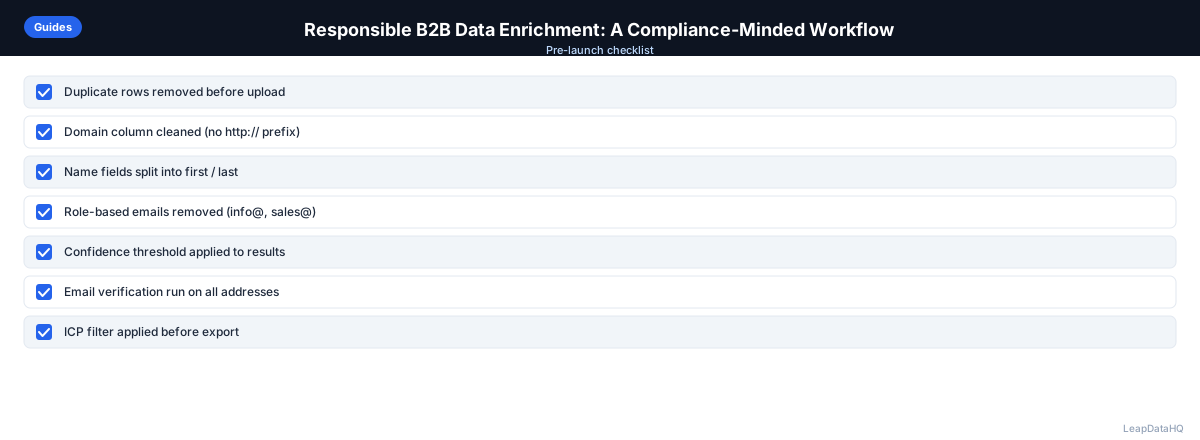
- Confirm you have a legitimate business reason to hold and enrich the records in your list before you begin
- Use enrichment sources that rely on public or appropriately licensed data rather than unauthorized scraping
- Enrich only the fields you actually need for your outreach or CRM purpose — avoid collecting more than necessary
- Keep a record of where each list came from and when it was enriched, in case you need to answer a data subject request later
- Include clear sender identification and an opt-out mechanism in any outreach built from enriched data
- Honor opt-out and deletion requests promptly, and remove those contacts from future enrichment cycles
- Review your applicable regional rules (CASL, CAN-SPAM, GDPR, or others relevant to your audience) with legal counsel before scaling outreach volume
What Responsible Enrichment Is Not
Responsible enrichment is not about pretending every enriched record is perfectly accurate — it is about being honest when it is not. A tool that flags low-confidence fields instead of presenting everything as verified is supporting a more responsible workflow than one that overstates its accuracy. Similarly, responsible enrichment does not mean sending unsolicited bulk messages to every enriched contact regardless of relevance — targeting and relevance are part of using the data responsibly, not just legally.
Practical Examples
Example: Regional Compliance Check
A sales team enriching a list with contacts across Canada, the US, and the EU segments the list by region before sending anything, and applies the stricter opt-out and consent expectations of GDPR to the EU segment rather than assuming one blanket approach covers all three regions.
Example: Data Minimization
An agency enriching a client list for a single outbound campaign only requests the fields needed for that campaign — name, work email, title, company — rather than enriching every available field, reducing the amount of personal data it holds beyond what the campaign requires.
How LeapDataHQ Supports Responsible Enrichment
LeapDataHQ surfaces confidence signals on enriched fields instead of presenting every result as verified, so you can make an informed decision about which records to use. The platform does not scrape LinkedIn or bypass platform access controls, and it does not auto-send messages on your behalf — enrichment, review, and outreach decisions stay with you. You remain responsible for confirming your specific compliance obligations; see our /disclaimer and /acceptable-use pages for the full scope of what LeapDataHQ does and does not do.
When to Use LeapDataHQ
LeapDataHQ is designed to support a responsible enrichment workflow rather than a "collect everything, contact everyone" approach. It surfaces confidence signals so you know which fields are reliable, it does not scrape platforms in violation of their terms, and it leaves outreach decisions in your hands rather than automating unsolicited contact. Use it as part of a workflow where you still confirm your specific legal obligations, segment by region where rules differ, and honor opt-out requests promptly.
Start Enriching LeadsFrequently Asked Questions
Is this article legal advice?
No. This is general, educational background on how compliance frameworks like CASL, CAN-SPAM, and GDPR relate to data enrichment. Laws vary by jurisdiction and change over time — consult qualified legal counsel for guidance specific to your business and your audience.
Does B2B outreach need consent under every regulation?
It depends on the framework and the region. Some frameworks have narrower exemptions for B2B communications sent in a business context, while others, like GDPR, apply more broadly to any processing of personal data regardless of B2B context. Review current official guidance for the regions your contacts are in.
Is it responsible to enrich a list sourced from scraped LinkedIn data?
Enrichment sources that scrape LinkedIn or other platforms in violation of their terms of service carry both compliance risk and data quality risk, since access is often blocked or outdated. A more responsible approach uses public or licensed data sources instead.
What is data minimization, and does it apply to enrichment?
Data minimization means collecting only the personal data you actually need for a specific purpose. It applies to enrichment because it is easy to enrich every available field "just in case" — a more responsible approach enriches only the fields your specific campaign or CRM process requires.
Do I need to keep records of where my enriched data came from?
Keeping a record of list sources and enrichment dates is a good practice, particularly for responding to data subject requests or demonstrating your process if a compliance question arises. It is not a substitute for confirming your specific legal recordkeeping obligations with counsel.